

Home
Honorary Consul General

Ben Jager
During the upheaval in Central and Eastern Europe in 1989, my attention was drawn to Romania. It turned out to be the only country where the overthrow of communism was accompanied by violence. More than 1,100 people were killed in December 1989. Afterward, a government was formed that consisted largely of former communists, which meant that reforms failed to materialize. It became clear that the country was thus falling behind the other countries in Central and Eastern Europe. In 1992, I went to see for myself and witnessed the disastrous situation in which the dictator Nicolae Ceauşescu—who had been executed on December 25, 1989—had left the country.
This prompted me to join the board of the international umbrella organization Operation Villages Roumains, which opposes the systematization plan of Romanian dictator Nicolae Ceaușescu. This plan entailed the large-scale destruction of thousands of traditional Romanian rural villages, the erasure of centuries-old cultural heritage, and the forced relocation of farmers to urban agro-industrial centers.
The OVR organization was established in Belgium, the Netherlands, Switzerland, Great Britain, and France. For more information click here
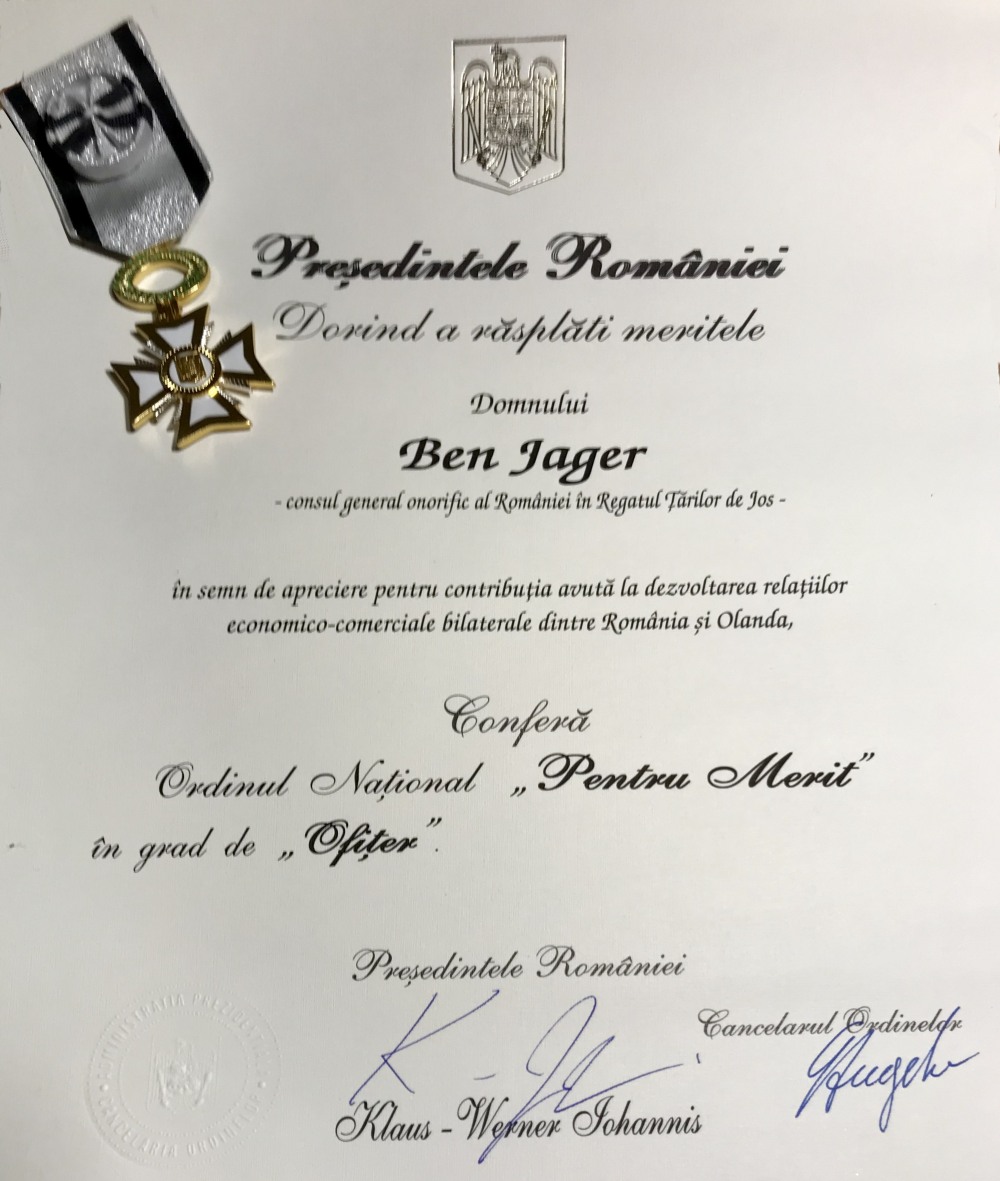
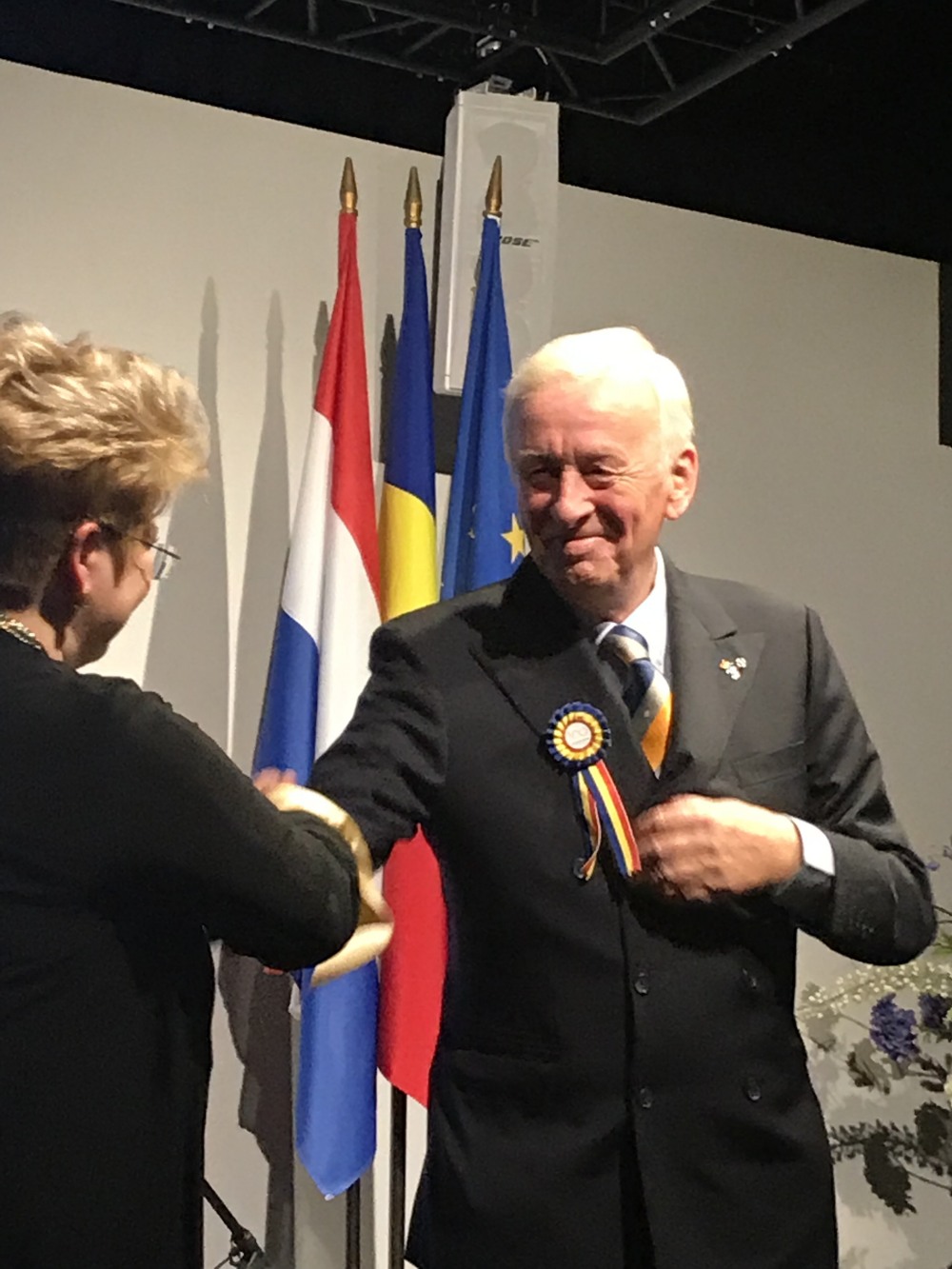
At the same time, as a project manager, I was asked to provide support to Romania and Bulgaria in their political and economic transition and the development of civil society; these activities were made possible by the MATRA program of the Ministry of Foreign Affairs. Support was provided in various policy areas, such as the restructuring of the agricultural sector, healthcare financing, water management, administrative decentralization, the functioning of the market economy in relation to competitiveness, minority policy (Roma), food safety, and so on. After 2004, the focus shifted to accession to the European Union, which also entailed intensive lobbying efforts in the Netherlands, as Romania was—and still is—a “blank spot” for many politicians and journalists. In September 2005, the then-Prime Minister Calin Popescu Tariceanu paid an official visit, during which he asked me to accept the position of consul for his country. In 2006, I took the initiative to establish the business platform Dutch Romanian Network. Because the magazine *Roemenië Bulletin* had ceased publication, I founded the magazine *Roemenië Magazine* as a merger of *Curier* (published by OVR) and the discontinued *Roemenië Bulletin*. Around 2009, the digital DRN Newsletter was added, into which the *Roemenië Bulletin* was gradually integrated. At a later stage, I was appointed Honorary Consul General of Romania. In 2018, I was awarded the Order of Merit with the rank of Officer by President Klaus Johannis for my efforts regarding bilateral economic relations between Romania and the Netherlands. I am a member of the Consular Corps of North Brabant and the Consular Corps of Maastricht.
 A country has only one embassy in another country. In the Netherlands, a country’s embassy is almost always located in The Hague, because that is where the government is based. Ambassadors are high-ranking diplomats who represent their own government. Consuls perform limited diplomatic functions. When a country recognizes the independence of another country, it establishes an embassy there. In addition to career consuls—who are based at the embassy—there are honorary consuls.The term “honorary” indicates that this position does not generate an income and also implies that it is an honorary title, in contrast to the career consuls who are attached to the embassy. Large or important consulates are sometimes designated as “consulates general.” Such a consulate general often oversees several regular consulates. Many small or poor countries have only an honorary consul in the Netherlands, because an embassy or consulate is too expensive. Romania has an embassy, three consulates, and a consulate general in the Netherlands.
Consuls existed as far back as Roman times and were the highest magistrates in the Roman Empire. Each year, two prominent senators were elected by the Roman people to this office, and they were expected to keep each other in check. The Roman consulate existed for over a thousand years, from 509 B.C. to 541 A.D., when it was abolished by Emperor Justinian. Of course,  today’s (honorary) consuls have a completely different role than in earlier times. Unlike “career” diplomats, the Honorary Consul does not enjoy full diplomatic immunity, but rather a limited form of it. This distinction is also reflected in the license plates on their cars. CD (Corps Diplomatique) for career diplomats and CC (Corps Consulaire) for Honorary Consuls.
The Vienna Convention on Diplomatic Relations (also known as the Vienna Convention) sets forth the rules governing diplomatic relations. These include the privileges and immunity of diplomats and diplomatic missions. The Netherlands and Romania are two of the 179 countries that are parties to the Vienna Convention. In addition to this convention, there is also, among others, the 1963 Vienna Convention on Consular Relations.
What does an honorary consul do?
The duties of an honorary consul may vary by country and by consul (see elsewhere on this website). The embassy is responsible for issuing travel documents (passports for citizens of the country of origin and visas for citizens of the host country), including emergency documents, civil registry formalities (marriage, divorce, birth, death), matters of family law and notarial services, the issuance of various consular declarations and certificates, the issuance of driver’s licenses and identity cards, assistance with the repatriation of remains (laissez-passer), information for businesses, and guidance on legislation. Based on the Vienna Convention on Consular Relations, the role of a consul can be described as:
- the protection of the interests of the state he represents and of its citizens;
- promotion of trade and of economic, cultural, and scientific relations;
- observing and reporting on economic, commercial, and cultural life;
- representation of nationals of the sending State (Romania) before judicial and other authorities in the absence of such nationals;
- protection of the interests of nationals of the sending State who are minors or otherwise legally incapacitated;
- signing documents;
- representative duties in the absence of the ambassador;
- providing assistance to seagoing and inland waterway vessels, as well as aircraft, that fly the flag of the sending State, and to their crews.
 |
 |
|---|---|
| On behalf of President Klaus Johannis, presented during Romania’s National Day by Ambassador Brandusa Predescu in the presence of former Prime Minister Jan Pieter Balkenende |
|
 |
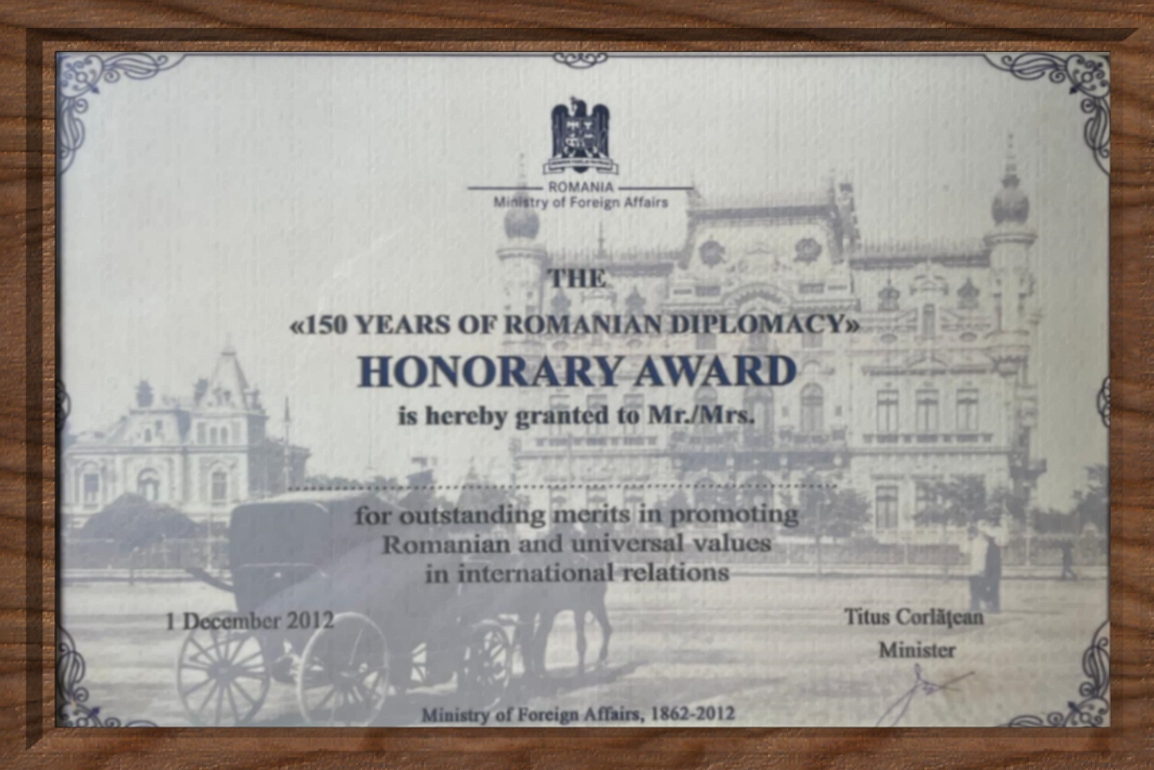 |
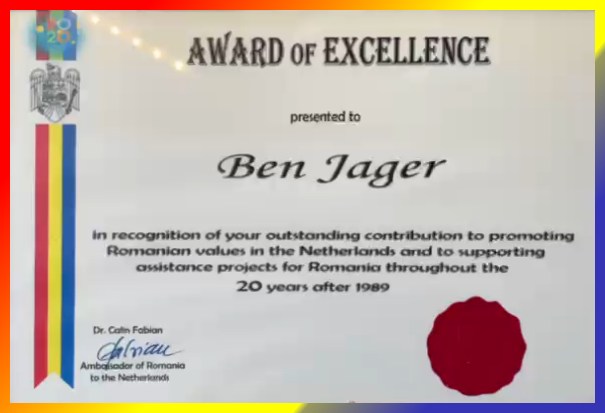
| Fabian Călin, Ambassador of Romania to the Kingdom of the Netherlands (2007–2012), |
Titus Corlățean, Minister of Foreign Affairs, 2012–2014 |