
 The application and provision of documents is handled by the consular section of the Romanian embassy in The Hague.
The honorary consuls and consul general respectively have an advisory role. The Head of the Consular Section is sometimes referred to as Chancellor or professional consul. At the Romanian embassy in The Hague, this position is fulfilled by Maria Roth.
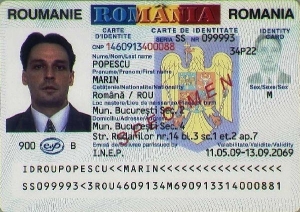
Explanation CNP number and layout ID Card
The abbreviation CNP means Code Numeric Personal and is the Romanian equivalent for the Dutch citizenship number. The explanation follows on the basis of the example shown. The first number in red indicates gender (1 = male, 2 = female). The next two digits are the year of birth (1946), two digits are the month of birth (09 = September) and then the day of birth (13), then the district or town code is indicated (40 = Bucharest), then four more digits (0088) which are not relevant to Dutch authorities, but which must be taken over for verification purposes.
The back of the ID Card is usually blank, sometimes with stickers of dates on which people participated in elections.
Special phone number email address
POLICE AND OTHER DUTCH AUTHORITIES
For calamity reporting (including detention, arrest, passing over) or request for consular assistance regarding Romanian citizens, please make this report in writing to haga.consul@mae.ro or use the emergency telephone number for urgent matters: +31 ( 0) 651 596 107
ROMANIAN CITIZENS
The emergency telephone number +31 (0) 651 596 107 or +31 (0) 6 2282 3300 may only be used for emergencies such as accidents with physical injury, deaths, disasters and other situations of a dangerous nature. It does not apply to regular consular activities
Visa for Romania
There is a separate platform for visas evisa.ro and is in English. A person with a residence permit issued by a Schengen State and / or holding a so-called Schengen visa is allowed to travel to Romania. It is important to take into account that you can travel to Romania for 90 days within a period of 180 days without a Romanian visa and to be able to stay there. However, it is important to take into account the access conditions as laid down in Article 6 paragraph 1 of the Emergency Ordinance 194/2002, which you can consult at: http://evisa.mae.ro/ConditionsOfEntry .
Useful links for Romanian citizens
Romanian Ministry of Foreign Affairs
http://www.mae.ro
Romanian Embassy in The Hague
http://www.haga.mae.ro/contact
https://haga.mae.ro/node/882
Online information and requests
http://www.econsulat.ro/Video/Despre_sistem.mp4
Digital Support Center
http://informatiiconsulare.ro/mae/ro-ro/paginadestart.aspx
Romanian Visa
http://evisa.mae.ro/home
Consular service Embassy
https://www.informatiiconsulare.ro/mae/ro-ro/ceimitrebuiepentru.aspx
Honorary consuls and honorary consuls general are not authorized to issue passports, notarized documents and other documents.
Living and working in the Netherlands
If you are a national of a country that belongs to the European Union (EU), the European Economic Area (EEA) or Switzerland, you do not need a residence permit to live in the Netherlands. The passport (or ID card) of the country of which you are a national is proof that you are legally resident in the Netherlands and are allowed to work here. You do not need to report to the IND and you do not need to request proof of lawful residence from the IND.
Your employer does not need to apply for a work permit (TWV) for you if you want to work in the Netherlands; this restrictive measure was in force for Romania until 1 January 2014 and has lapsed.
Citizen service number
If you intend to stay in the Netherlands for more than four months, you must register in the Municipal Personal Records Database. To do this, go to the town hall of the municipality where you live. You will then receive a citizen service number (BSN). Your employer uses this number to arrange a number of matters with, for example, the Tax Authorities. GPs, hospitals and pharmacies can also ask you for a BSN. For more information, visit the website of the municipality where you live or www.burgerservicenummer.nl.
If you intend to stay in the Netherlands for less than four months, registration in the municipality is not mandatory. If you still want a citizen service number, you can register in the Municipal Personal Records Database at one of the municipalities with a counter for non-residents.
For Romanian newcomers, please refer to the comprehensive Romanian-language guide “Ghid privind Residenta a Peroanelor Fizice”.
To consult this guide click here.
Birth certificate
In Romania, a birth certificate is only issued once and it is not possible to request a recent extract. However, it is possible to request a duplicate of the birth certificate. To do this, a form must be used to indicate that the original birth certificate has been lost or damaged. The form is available from the Ministry of Foreign Affairs in The Hague.
Certificate of unmarried status
A certificate of unmarried status cannot be obtained in Romania. It is possible, however, to obtain a statement from the town hall where the birth of the person concerned is registered stating that no marriage of the person concerned is known and / or registered. If a person gets married in Romania, this is registered with the municipality where the persons concerned reside. This municipality informs the municipality (s) where the birth of the person concerned is registered.
In many cases, a Personal Declaration of the person concerned will be submitted. A self-declaration of unmarried status, drawn up by the Romanian Embassy in The Hague on April 3, 2012 or later, is suitable for use in the Netherlands without further legalization, because both the Netherlands and Romania are members of the European agreement on the abolition of legalization of documents drawn up by diplomatic or consular officials. Statements made up to and including April 2, 2012 have yet to be legalized. The drafting date is binding.
Apostille or legalization
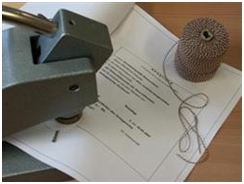 As indicated above, such legalization is no longer applicable and an Own Declaration will suffice. However, before a Romanian birth certificate can be registered in the Netherlands, a limited form of legalization must take place. Because both countries have concluded an Apostille or legalization treaty, an apostille stamp on the birth certificate is sufficient.
Romanian versus Dutch version
The Romanian-language version is still being edited with regard to current additions to the Covid-19 crisis.
This version (Romanian language) is primarily aimed at Romanian citizens and will therefore contain more information than the Dutch version.


